
We Followed the Same Instructions. The Results Were Completely Different.
A simple family paint night revealed a profound truth about AI, growth, and what it means to be human.

Aren’t these gorgeous!? Looks just like the real thing!
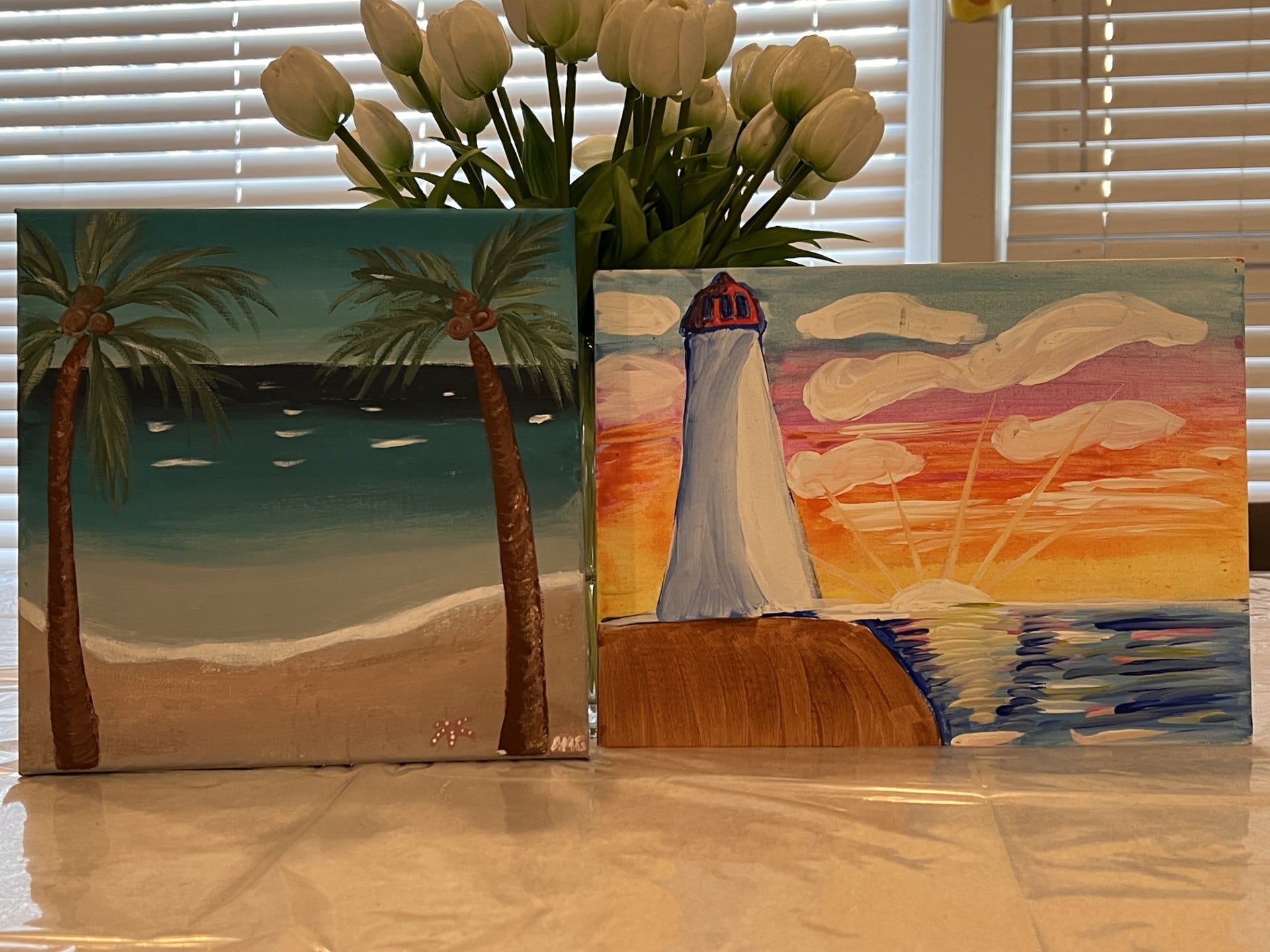
Well, not quite, but I tried my best.
Every summer, our extended family gets together, and one of the group activities is paint night. We all get identical canvases and paints, and we watch a detailed, step-by-step video of how to create a specific painting.
What’s fascinating is that, even though we’re all following the exact same instructions, the end results look nothing alike. Some clearly have an artistic eye. Others produce something closer to an accidental Picasso or Jackson Pollock.
And it got me thinking…
Why is this different from assembling an IKEA bookcase?
If we all took a family trip to IKEA, bought identical LADMAKARE shelving units, and followed the instructions, we’d all end up with identical units- more or less. (Minus for a missing dowel here or there)
So why is it that when it comes to construction, identical instructions produce identical results, but when it come to art, the outcomes vary as widely as the people themselves?
Now, I know, you’re probably thinking that it’s a silly question. The bookcase parts are pre-cut and standardized. There’s very little room for variance. You’re correct. With painting as well, if we were all painting color-by-numbers and had decent hand-eye coordination, we could also produce identical pieces of art.
So why don’t we do that? Wouldn’t the pictures come out “better”?
Here’s the deeper difference:
With the bookcase, the person is a tool - a means to an end. The goal is the finished product.
With art, the canvas and paint are the tools - and the person is the point.
The goal isn’t just a picture of a palm tree. You can download that in two seconds. The goal is personal artistic expression - how you see it, how you bring it to life.
Think about it this way:
If a robot could assemble the bookcase for you, you’d gladly let it.
If a robot offered to paint the painting, it would defeat the entire purpose.
This distinction is an extremely powerful paradigm for how we think about life.
Rav Wolbe, in Alei Shur, offers a powerful insight. G-d is Almighty. Does he really need us to do anything? Can’t he solve every world problem instantly? Of course He could, but if He did, what would be left for us to do?
If we could snap our fingers and eliminate all need: no poverty, no loneliness, no struggle, would that be a good thing?
Surprisingly, no.
Because then there would be no kindness, no generosity, and no opportunities to grow.
This is a powerful paradigm shift. The ultimate goal of our actions is to shape and develop ourselves, and give expression to our own G-dliness.
And now, in an age where machines are becoming more capable by the day, this question becomes urgent:
Which parts of life are “bookcases” - tasks we should gladly outsource,
And which parts are “paintings” - experiences so essential to who we are that outsourcing them would defeat the purpose of our existence?
Relationships.
Education.
Wisdom.
Kindness.
Parenting.
Mitzvos.
By all means, let machines build our bookcases.
But we should be very careful before letting them paint our lives.
Now THIS was a beautifully written piece: relatable, thoughtful, incisive and....short!
Have a good Shabbos.